
What a pregame game has to do
A pregame has a hard time limit. The group leaves in fifteen or twenty minutes. A game that takes ten minutes to set up and explain eats the entire window before anyone plays a round.
The energy goal is specific: arrive louder. The pregame exists to warm up a group that will walk into a bar, a club, or a house party. A slow game that calms the room works against the purpose. The game should raise the volume, raise the confidence, and make the transition from sitting to going out feel natural.
It also has to end clean. The Uber notification pops up and the group needs to walk out immediately. A game with ongoing scores, physical props to pack, or a climax that demands ten more minutes traps people. The right pregame game stops mid-round without consequence.
The modes that fit a pregame window
First To Last To opens the session. It starts in seconds, needs no explanation, and the reactions come fast. Two or three rounds while people still find their drinks, and the room is already facing each other instead of their phones.
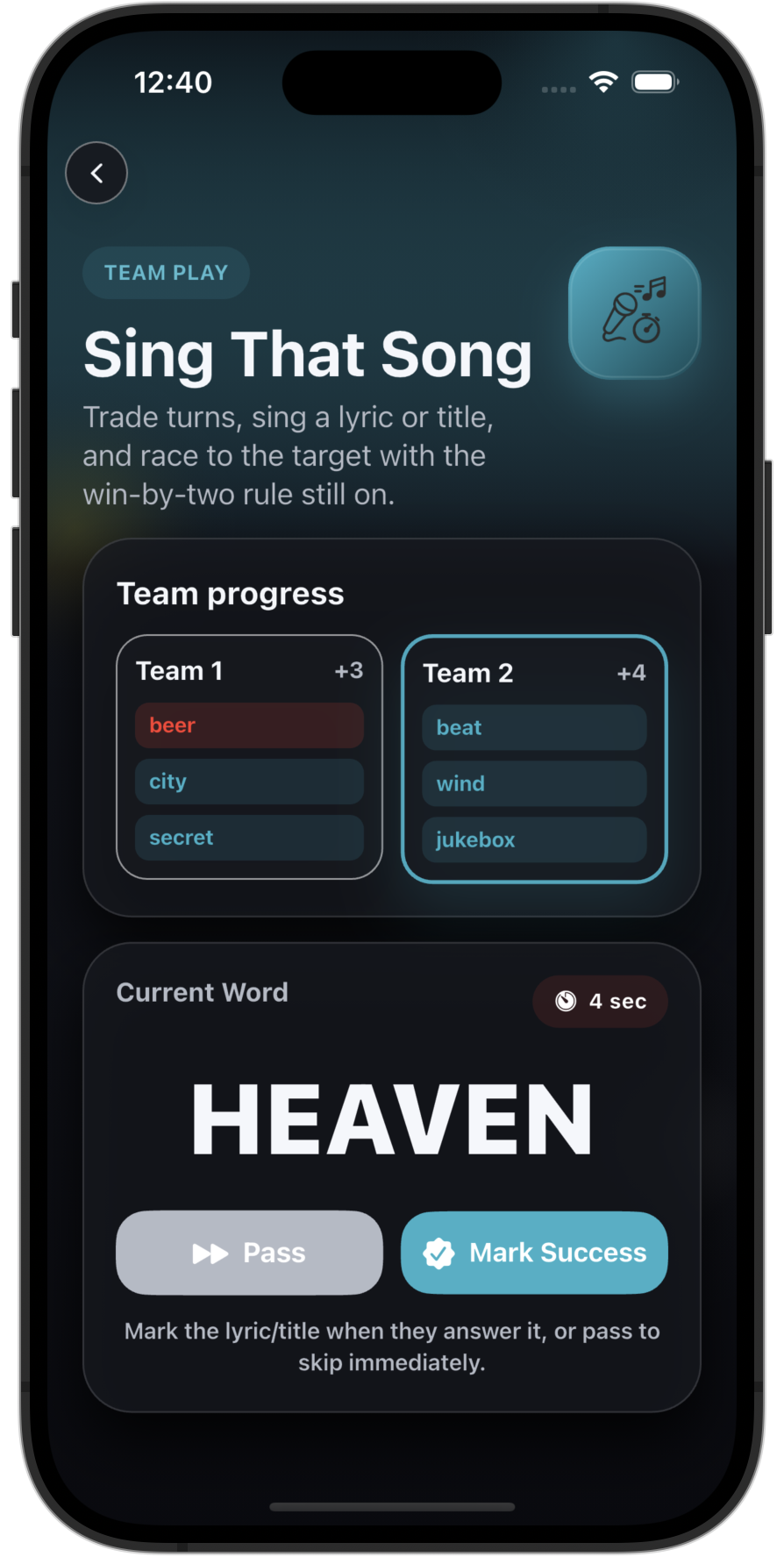
Sing That Song raises the volume. A music prompt drops and players race to sing or shout the title. The competitive rush and the singing push the energy up faster than a conversation does. A group that is about to go to a music venue warms up for it in real time.
Card Roulette brings the dares. Short draws, bold prompts, fast reactions. It works in a pregame because each draw is self-contained. The Uber arrives mid-round and nobody needs to resolve a score or finish a longer game.
All three start instantly, run loud, and stop without consequence. That trifecta is what separates a pregame game from a party game. The party game can take its time. The pregame game respects the clock.
- First To Last To: instant start, no explanation needed.
- Sing That Song: raises volume and energy with music.
- Card Roulette: bold dares that end clean on any draw.
How to run ten minutes that send the group out loud
Start the game the moment the group has drinks in hand. Do not wait for everyone to settle or for the conversation to die. A pregame game works best when it cuts into the early chatter and pulls focus fast.
Keep rounds to one or two minutes each and rotate modes. First To Last To for two rounds, Sing That Song for three, Card Roulette until the ride arrives. The rotation keeps the energy climbing instead of plateauing on one game.
Match the music in the room. If someone already plays a playlist, Sing That Song borrows that energy. If the room is quiet, First To Last To brings noise from nothing. Read what the room already gives you and feed it back louder.
End without announcement. When the notification arrives, put the phone in a pocket and head to the door. A pregame game that needs a formal ending holds the group up. The best ones just stop, and the energy carries into the night.
Why the pregame matters for the rest of the night
A group that pregames together arrives at the venue as a unit. They already share inside jokes from the rounds, they already hit a volume that matches the bar, and they already broke through the early-night quietness that makes the first hour at a venue feel slow.
The pregame also gives quiet members of the group a way in. Someone who takes thirty minutes to warm up at a bar gets that warmup done at the apartment instead. By the time the group arrives out, the quietest person already laughed and shouted alongside everyone else.
Ten minutes is enough. A pregame does not need to be a full party. Three rounds of fast games, a few draws from Card Roulette, and the energy is where it needs to be. The rest of the night takes it from there.