

Why most office games feel awkward
Two things sink an office game. The first is exposure. A game that puts one person on stage in front of their manager makes people freeze instead of play.
The second is a long rules speech. Half the team arrives unsure they even want to play, and a five-minute explanation gives them time to drift back to their phones. By the time the game starts, the room has checked out.
The fix is a game that hides the individual inside the group. When the room answers together, a quiet coworker contributes without being singled out, and the awkwardness never gets a foothold.
Modes that fit a work crowd
Start with First To Last To. It opens in seconds with no setup speech, which respects the coworkers who are not sure they want to play yet. A few quick rounds warm the room.
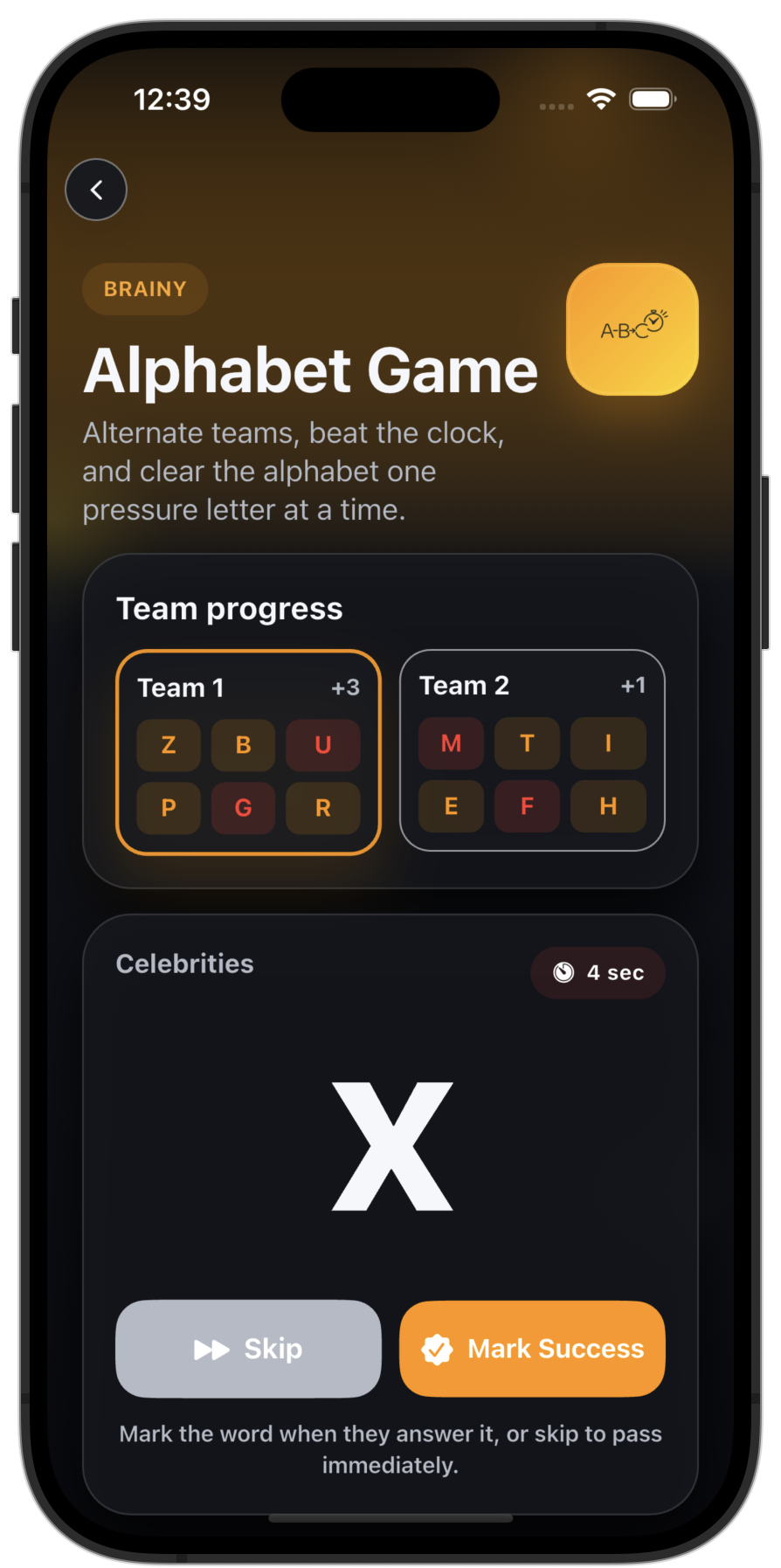
Move to Alphabet Game once people are in. The timer and the target letter make turns competitive, and the back-and-forth gives the team something to root for without putting anyone alone on stage.
Add Spelling Bee for a focused round. Split the room into teams and the spelling challenge rewards different strengths, so the win does not always go to the loudest person at the social.
- First To Last To: quick, low-pressure opener.
- Alphabet Game: competitive turns the team can rally around.
- Spelling Bee: team challenge that spreads the wins around.
How to run an office session
Split into teams instead of running solo turns. Teams give quiet coworkers cover and turn the game into a group effort rather than a spotlight.
Keep it short. A few minutes per round means the session fits a lunch slot, the end of an offsite, or a break between meetings without eating the afternoon.
Read the room on heat. Office games should stay light, so skip the bolder adult modes and keep the picks ones nobody would mind playing in front of a manager.
When office games fit best
Team socials and offsites are the core case. People want to connect outside the meeting rhythm, and a quick game gives them a reason to talk that is not work.
They also help a team that barely knows each other. A new hire, a merged team, a cross-department mixer. The word and letter modes give everyone an easy way in because the room plays together from the first round.