

Why traditional icebreakers feel cringe
A circle where each person introduces themselves puts every stranger on stage alone. The pressure is invisible but absolute: you have ten seconds to be interesting, and fourteen strangers evaluate you in real time. Adults tolerate this in mandatory work settings. They hate it everywhere else.
The fun-fact format fails hardest because it asks people to be vulnerable before any shared context exists. A good conversation earns that gradually. A forced circle skips the earning and jumps to the performance, which is why the room fills with silence and nervous laughter.
The cringe comes from the structure, not the people. Give the same group a game where everyone acts at once and nobody performs solo, and the tension evaporates. The room bonds over shared reactions instead of individual spotlights.
What replaces the introduction circle
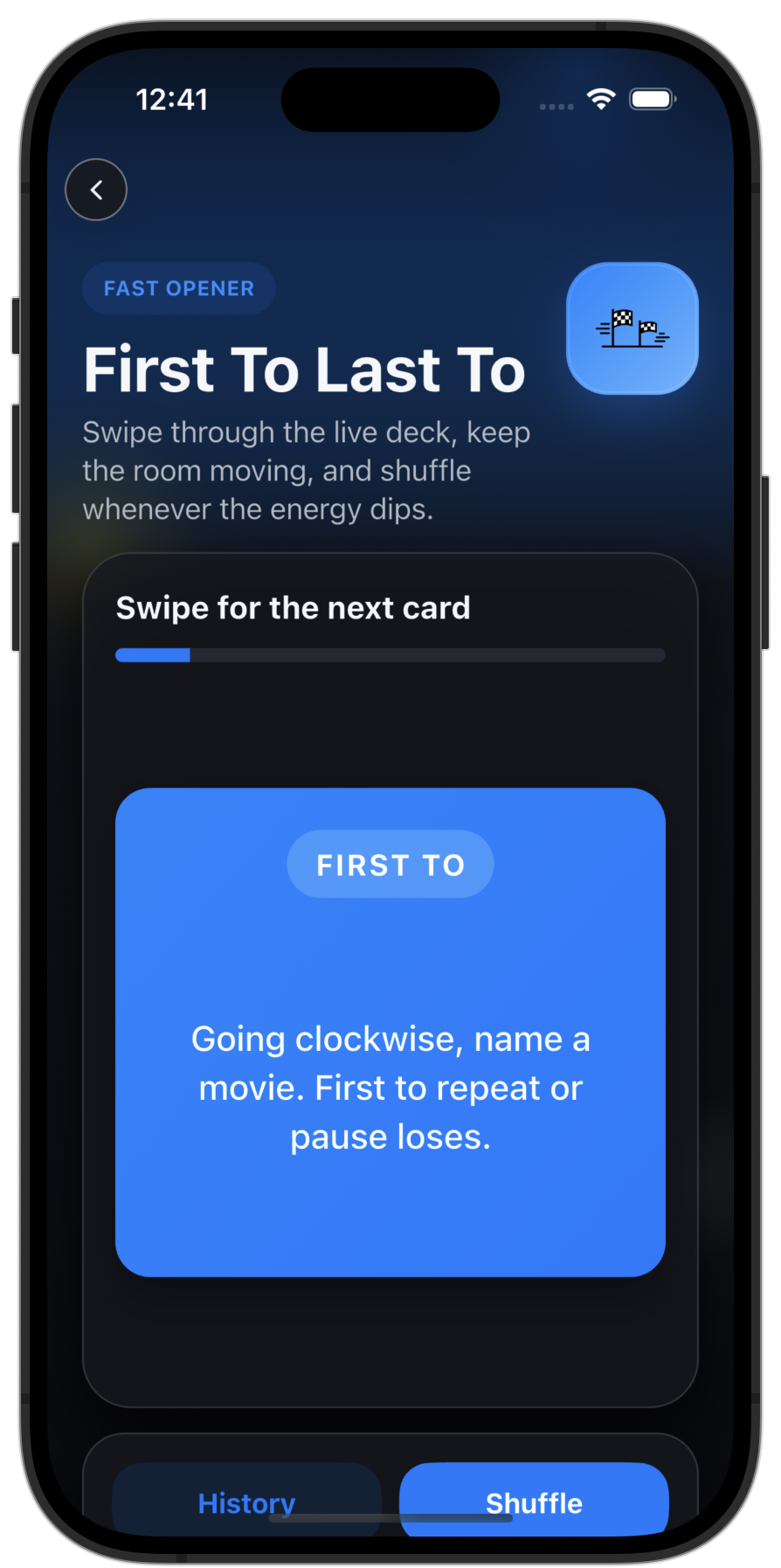
Group-reaction games break the ice faster because they remove the solo performance. First To Last To names a scenario and the room points at who fits. Everyone acts simultaneously, so no single person carries the moment alone.
The mechanic works because it creates instant inside jokes. When the group points at someone for a prompt, the reaction is shared. That shared reaction is the actual icebreaker. The game is just the delivery vehicle.
Guess That Word builds a different kind of connection. One person guesses and the room shouts clues, which means strangers collaborate before they even know each other's names. Working together toward a word gives the group a reason to talk that has nothing to do with being interesting.
Sing That Song creates an instant level playing field. A music prompt drops and whoever catches it first wins the moment. It rewards enthusiasm over social confidence, which means the quiet person in the corner can break through by humming three notes before anyone else.
How to run an icebreaker session that works
Skip the introduction. Start the game first. People learn each other's names through the rounds, through pointing, through shouting clues at the guesser. The names stick better because they attach to a moment instead of a forced circle.
Open with First To Last To because it requires nothing from anyone except a reaction. No speaking, no performing, no answering a question alone. The room warms up without anyone feeling tested.
Move to Guess That Word after two or three rounds. By then the group has already laughed together, so giving clues to a stranger feels natural instead of forced. The ice is broken before anyone labels it.
Keep the session to ten or fifteen minutes. An icebreaker that overstays becomes the party instead of the warmup. Run a few rounds, let the energy carry into natural conversation, and put the phone away.
Where icebreaker games fit
New teams and onboarding events benefit most. A group that has to work together but has never met needs a shared experience that is not a meeting. Ten minutes of a game gives them that.
Mixers and social events are the second case. A room where most people arrived with one friend and know nobody else stalls without a focal point. The game gives them one.
Dinner parties with mixed friend groups hit the same problem. The host invited people from different parts of their life, and those people do not have a natural conversation starter. A quick game round gives them a shared reference before the dinner even begins.