
What makes charades work and where it stalls
The core loop of charades is information asymmetry. One person holds the answer and the room extracts it through guessing. That loop generates tension, shouting, and group focus. It is the reason charades has survived centuries without major changes.
The format stalls because the constraint is always the same: no talking, act it out. After a few rounds, players recycle the same gestures. Movie is always a hand crank. Song is always singing into a fist. The novelty fades and the game becomes a test of pantomime vocabulary rather than creativity.
The other friction point is pacing. Charades runs on individual turns with long gaps. When one person acts and eight watch, the watchers drift unless the performer is unusually animated. A modern group expects faster feedback loops.
Alternatives that keep the core loop
Guess That Word keeps the one-knows-and-the-rest-guess format but replaces silence with speech. The cluegiver describes the word using any words they want, and the room shouts answers. The constraint is speed instead of silence, which suits a loud party better than a quiet living room.
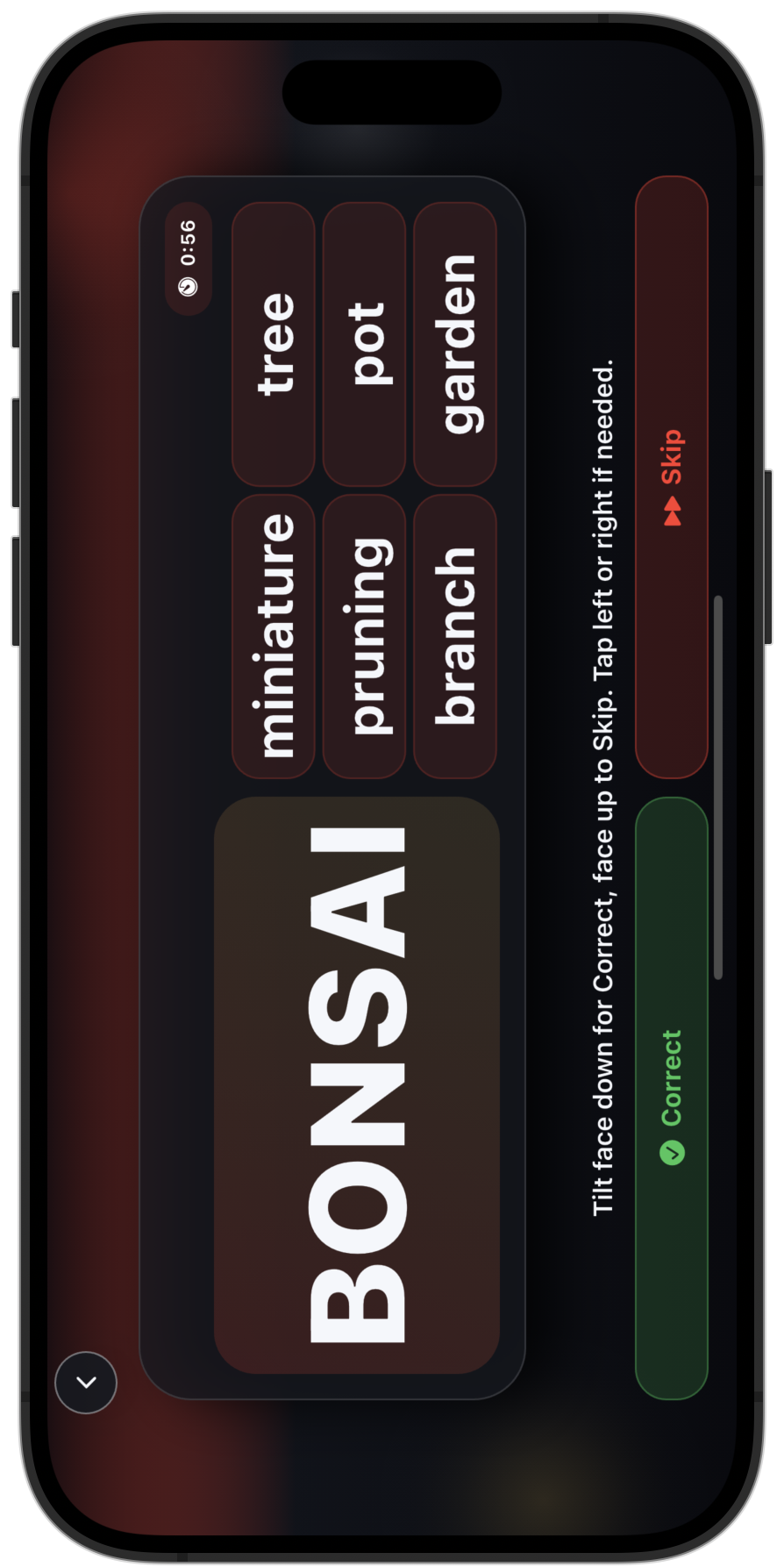
Guess That Word Extreme tightens the constraint further. A forbidden word appears on screen alongside the target, and the cluegiver must avoid it while describing the answer. This creates the same creative pressure as charades but through language rather than gesture. The dodging produces wilder descriptions and bigger reactions.
Sing That Song shifts the extraction mechanic to music. A prompt points at a song and players race to sing or name it. The information asymmetry still drives the game, but the format rewards musical memory instead of pantomime skill.
Alphabet Game adds a competitive time constraint. A letter and a category set the frame, and players race to answer within the timer. It captures the rapid-fire energy that charades lacks on its slow turns.
- Guess That Word: charades with speech instead of silence.
- Guess That Word Extreme: forbidden-word constraint for creative pressure.
- Sing That Song: musical guessing for a different skill set.
- Alphabet Game: timed letter race for competitive groups.
When to pick which alternative
For a group that loves charades but is bored of the same gestures, Guess That Word Extreme is the closest successor. It keeps the constraint-driven creativity but changes the medium from body to language. The room stays loud and the guesser still shouts answers at speed.
For a mixed group where some people hate performing, Guess That Word is the safer pick. The cluegiver talks instead of acts, which removes the physical self-consciousness that makes some adults avoid charades entirely.
For a music-heavy group, Sing That Song replaces charades entirely. The same excitement of recognizing an answer before anyone else, but the medium is a melody instead of a mime. Groups that have strong musical taste gravitate to this and stay longer.
For a competitive group that wants speed over creativity, Alphabet Game delivers. It drops the asymmetry in favor of a race, which suits groups that find charades too slow but still want a word-based game.
Running a charades-alternative night
Open with Guess That Word as the bridge. Anyone who knows charades understands the format in one round: someone knows the word, the room guesses. The shift from gestures to speech is the only new piece.
Raise the difficulty with Guess That Word Extreme once the group is warm. The forbidden word adds a layer that rewards the same creativity charades rewards, but through avoidance rather than pantomime.
Mix in Sing That Song between word rounds to shift the energy. A music round after two word rounds resets the room and brings in players who prefer recognition over description.
Close on whatever mode the group gravitates toward. The four alternatives share enough DNA with charades that a group used to the classic game moves between them without a rules speech at each switch.